In the Echo of the Moon
In the Echo of the Moon
By Marsha van Leersum (They/Them)
In collaboration with Ahreum Lee, Sickhouse became a nesting ground of heroes and guardians fighting against the power of microaggression. Artist Ahreum Lee (She/her) hosted a three-part workshop in which a group of participants developed weapons from E-textiles and recycled materials to articulate, uncloak and explore the theme of microaggressions.
When I first came across this workshop, my curiosity was sparked by the idea that fighting microaggressions can be kindled and transformed through creative resistance. Combining both technology and social injustices, I was intrigued to understand how a “weapon” could be built to defend against microaggressions. How can these subtle yet often unintentional slights and comments to be shaped into moments of awareness and connection rather than conflict?
Before diving into the forging of the heroes and guardians against microaggression:
What actually defines a microaggression? The term describes subtle, unintentional, yet discriminatory insults targeted at marginalized groups. They can apply to gender, sexuality, culture, religion, or disability. They come from implicit biases and appear on a daily basis, but it’s not explicitly meant as an insult. Making it a “micro” aggression is the quantity of “small” comments and its repetitiveness laying the foundation of the hurt. If 9 out of 10 comments regard people applying the same reaction or comment, it reinforces a bias. Even if the comment isn’t directly about you - isn’t meant to hurt you - you are affected by it.
“In the Name of the Moon”
The workshop series was cut into two parts. The first part was a two-day workshop on the 11th and 12th of July, and the second part on the 25th of July. At the first workshop, we started off sharing the meaning and lived experience of microaggressions. Following up, building a wearable sound device created from the lived experience of the participants.
Part I
The first day, the group was asked to explore and discuss our understandings and experiences regarding microaggressions. Laying the basis of our heroes’ origins.
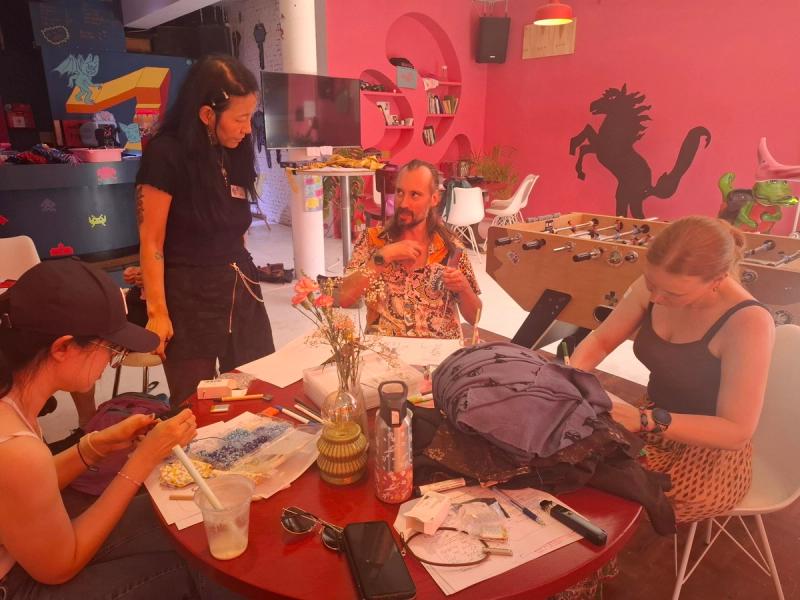
Working in groups of four, we collectively shared microaggressions our loved ones and we face in our daily lives. Some stories were about daily comments at work. Feeling silenced by the judgement of coworkers. Others were grounded in the anxiety of wondering if choices of sportswear would make someone a target of violence in public space.
The microaggression I shared was the routine of misgendering. When - in passing conversation- I explain or correct a person my preferred pronounce, I am often met by comments regarding “not looking the part” (applying a stereotype on what non-binary should present as) or “I’ll do it wrong next time anyway. This they/them stuff I have wrong all the time.” I carry no anger regarding accidentally being misgendered. In the moment, I mostly agree with them kindly. I understand it is hard to change vocabulary, as for most people it is a new reality we all deal with in our own time. Yet, who is acknowledged in these continuous conversations?
After sharing our experiences and stories of feeling unheard or unsafe, we were invited to individually build a character from these conversations. Bringing a hero into life who embodies the struggle and allows us to reimage how resistance can look like – or rather sound like.
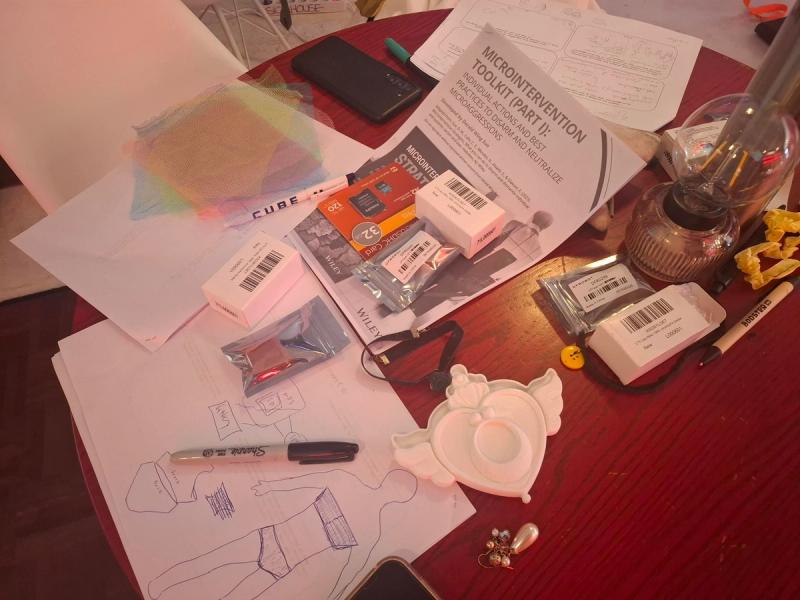
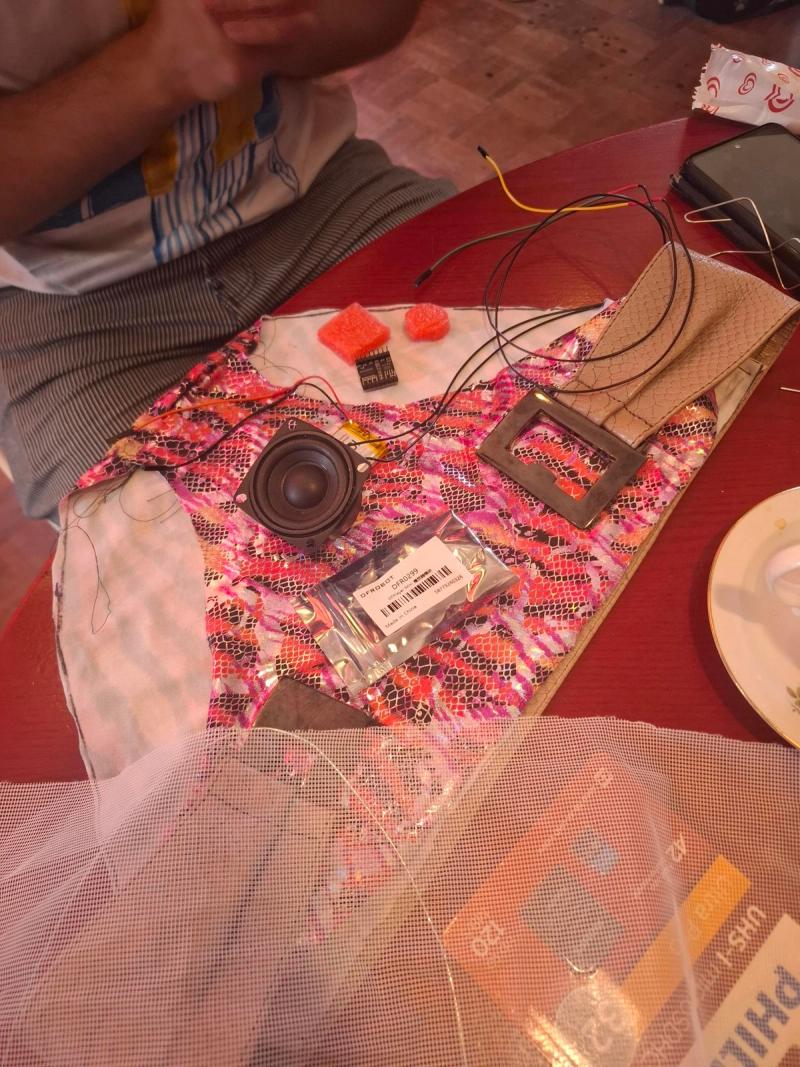
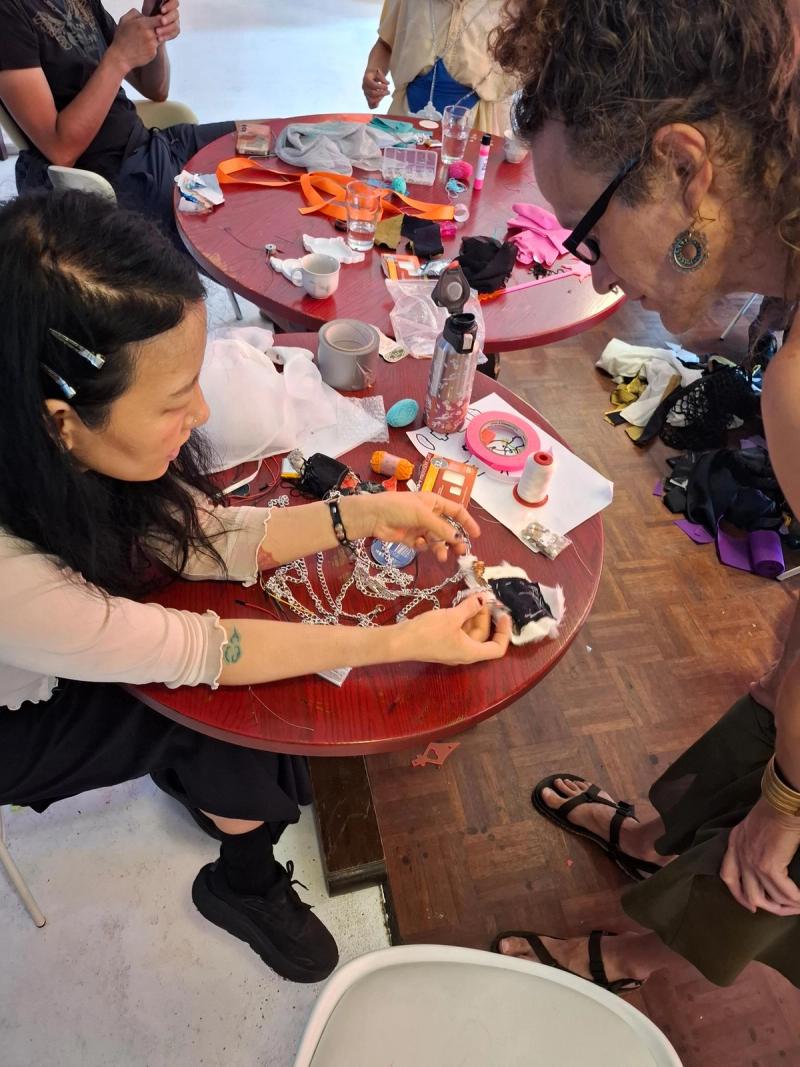
Out of the soldering fumes and steaming piles of hot glue arose a hero.
In two days of slow awakening as circuit boards were connected and seams were sewn together, a device of resistance was forged.
A guardian carrying my internal frustration of unbalanced acknowledgement, a sparkle of irony, and a touch of comic relief. From a place of feeling unheard, “The Bulge” arose.
The Bulge was born wearing a clear message, a core I sometimes wish for. Calling: “Pronouns. They/them. That’s it. Shut up.”
The Bulge acknowledges and creates space as simply as it gets. Their superpower is a jockstrap activated by squeezing the ‘hog’. It looks quite radical in the way that it looks shocking or rather, provocative. The message to micro-aggressors is to take back space– grabbing the attention (literally).
Part II
Saving the world in the name of the moon
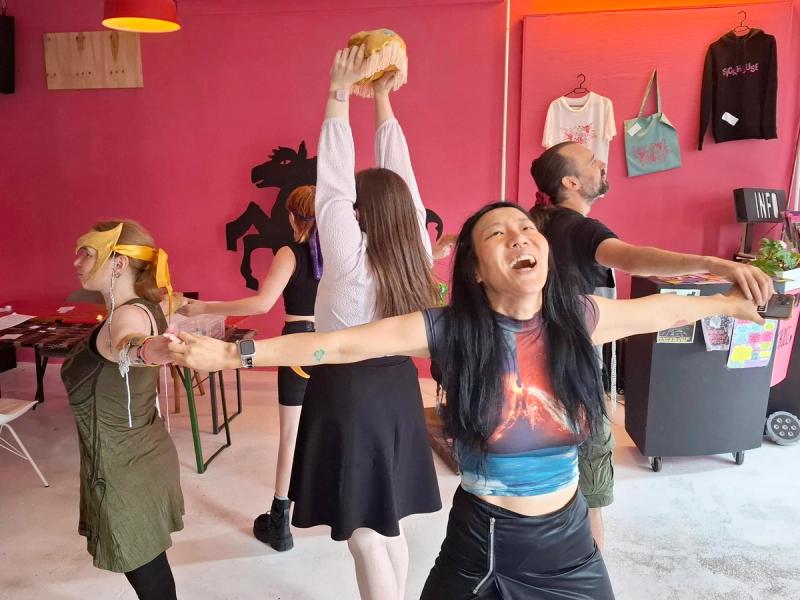
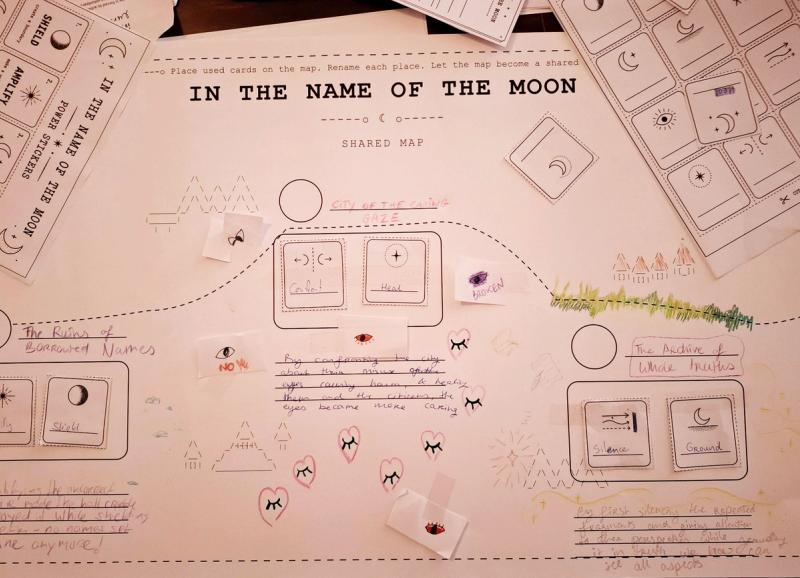
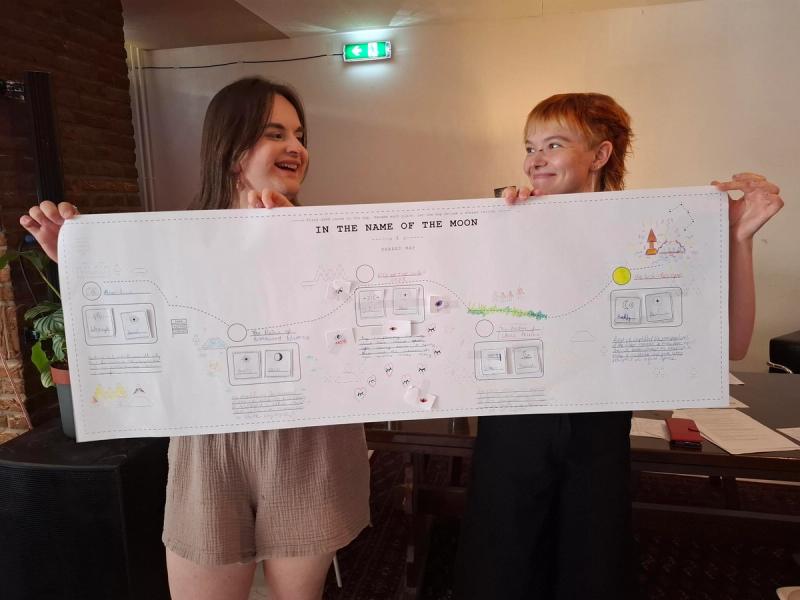
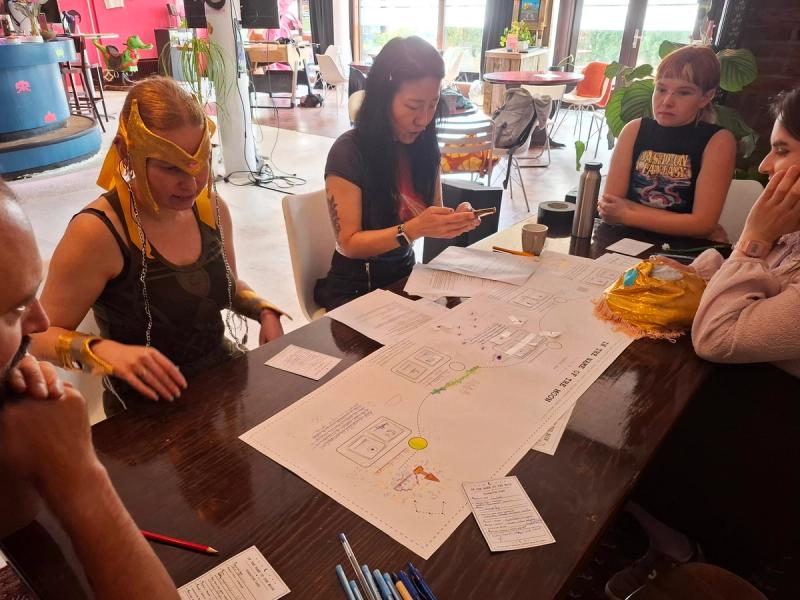
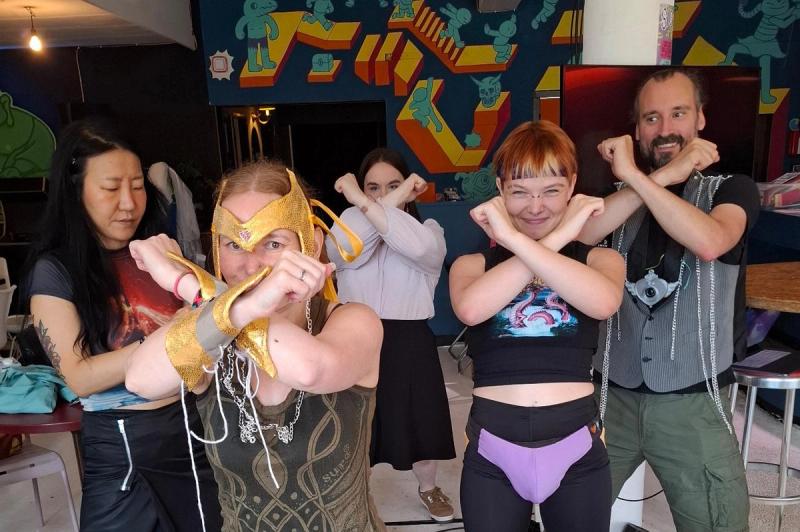
On July 25th, the heroes were called back together. In a LARP (live action role play), we navigated through scenarios of microaggression. Entering the space as our heroes, loaded with our newly found resistance in our sound-equipped devices.
Fighting a world contaminated by microaggressions, the heroes’ individually crafted sounds and actions merged into one. Combining the powers of our own resistance and enforcing it with others. Harmonizing the hurtful sounds and buzzes of a fractured world into a collective field of sound. The guardians we created were not here to fight in the traditional sense, and our “weapons’ were not built for destruction. Instead, through our roles, we got to rethink our position toward the comments we endure. And we did not have to face it alone.
What I took away from the workshop is the ability to shift into a third-person position. That of a hero. From this position, I got to explore new modes of imagining and transforming the hurt and misunderstanding into moments of awareness and care. The workshop created space to hear each other, talk through our shared experiences, and from that point to think beyond it.
It wasn’t about just finding solutions to ‘fix’ the problems microaggression brings to the table. We got to reposition ourselves to remain aware that these injustices happen, but that we can create the agency to resist them. And this time with the power of creativity and play.
With love,
Marsha “the Bulge”
Pronouns.
They/Them.
That’s it.
Shut up.